In the realm of modern technology, yaw sensors have emerged as pivotal components in a variety of applications, from automotive systems to aerospace engineering. These devices play a fundamental role in measuring the rotation of an object around its vertical axis, providing critical data for stability and navigation. This article delves into the inner workings of yaw sensor technology, its diverse applications, and the future trajectory of this fascinating field.
Understanding Yaw Sensors
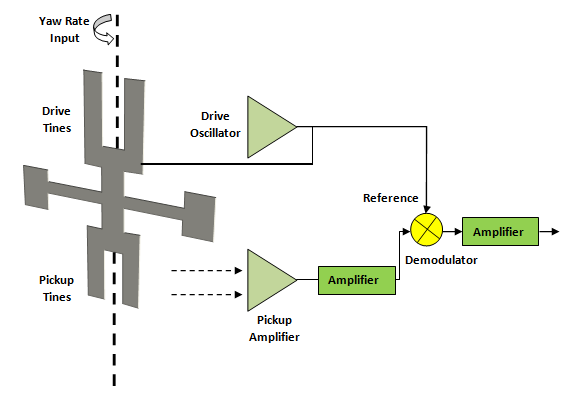
Yaw sensors, often referred to as gyroscopes, utilize the principles of angular momentum to detect rotational motion. They measure the yaw angle, which is the angle of rotation about the vertical axis. This data is crucial for systems that require precise orientation and movement control.
Types of Yaw Sensors
- Mechanical Gyroscopes: These traditional sensors rely on spinning masses and the principles of inertia to maintain orientation. While they are robust, they tend to be larger and more cumbersome.
- MEMS Gyroscopes: Microelectromechanical systems (MEMS) gyroscopes are compact and widely used in consumer electronics. They offer high precision in a small package, making them ideal for mobile devices and automotive applications.
- Optical Gyroscopes: Utilizing the interference of light, optical gyroscopes provide extremely high accuracy and are often employed in aerospace and military applications.
Applications of Yaw Sensors
The versatility of yaw sensors allows for their integration into a myriad of systems:
1. Automotive Industry
In vehicles, yaw sensors are integral to stability control systems. They help determine the vehicle’s dynamics, enabling features like Electronic Stability Control (ESC) and Advanced Driver-Assistance Systems (ADAS) to enhance safety and performance.
2. Aerospace
Yaw sensors play a critical role in aircraft navigation and stability. They assist in maintaining the correct orientation during flight, ensuring safety and efficiency;
3. Robotics
In robotics, yaw sensors are essential for navigation and movement. They enable robots to understand their position and orientation in space, facilitating complex tasks in dynamic environments.
4. Consumer Electronics
From smartphones to gaming consoles, yaw sensors enhance user experiences by enabling motion detection and orientation adjustments, making interactions more intuitive and engaging.
Future Trends in Yaw Sensor Technology
As technology continues to evolve, so does the potential of yaw sensors. Innovations in materials science and microfabrication techniques are leading to the development of even smaller, more efficient sensors. The integration of artificial intelligence and machine learning algorithms will further enhance the capabilities of yaw sensors, allowing for more accurate data interpretation and improved system responses.
Yaw sensor technology is at the forefront of modern engineering, with applications spanning multiple industries. As we look to the future, the advancement of this technology promises to unlock new possibilities in automation, navigation, and beyond. The journey of yaw sensors is just beginning, and their impact will undoubtedly shape the landscape of technology for years to come.